Pollen allergies: 7 practical tips for breathing easier in spring
Published on February 27, 2026Every year, as the first warm days arrive, millions of people dread the return of pollen. Itchy eyes, stuffy nose, sneezing fits… what should be an enjoyable season quickly becomes an obstacle course.
The good news? While you cannot remove pollen from outdoor air, you can significantly reduce its impact, especially by improving indoor air quality. Here are 7 effective strategies to limit exposure and breathe more comfortably.

1. Understand the Pollen Calendar to Plan Ahead
In France, the pollen season extends from January to September:
- January – March: cypress, hazel, alder
- April – June: grasses (the most allergenic)
- August – September: ragweed
Knowing the high-risk periods allows you to plan instead of just reacting. The National Aerobiological Surveillance Network (RNSA) publishes detailed regional alerts. Checking them regularly helps adapt outings, activities, and protective measures.
2. Identify Daily Pollen Peaks
Pollen concentrations vary throughout the day. They tend to be higher in the morning for some trees and late morning or early afternoon for grasses, especially in dry and windy conditions. After rain, the air is often temporarily easier to breathe.
Adjusting outdoor activities or exercise may seem minor, but these changes reduce the amount of particles inhaled, and thus the intensity of symptoms.
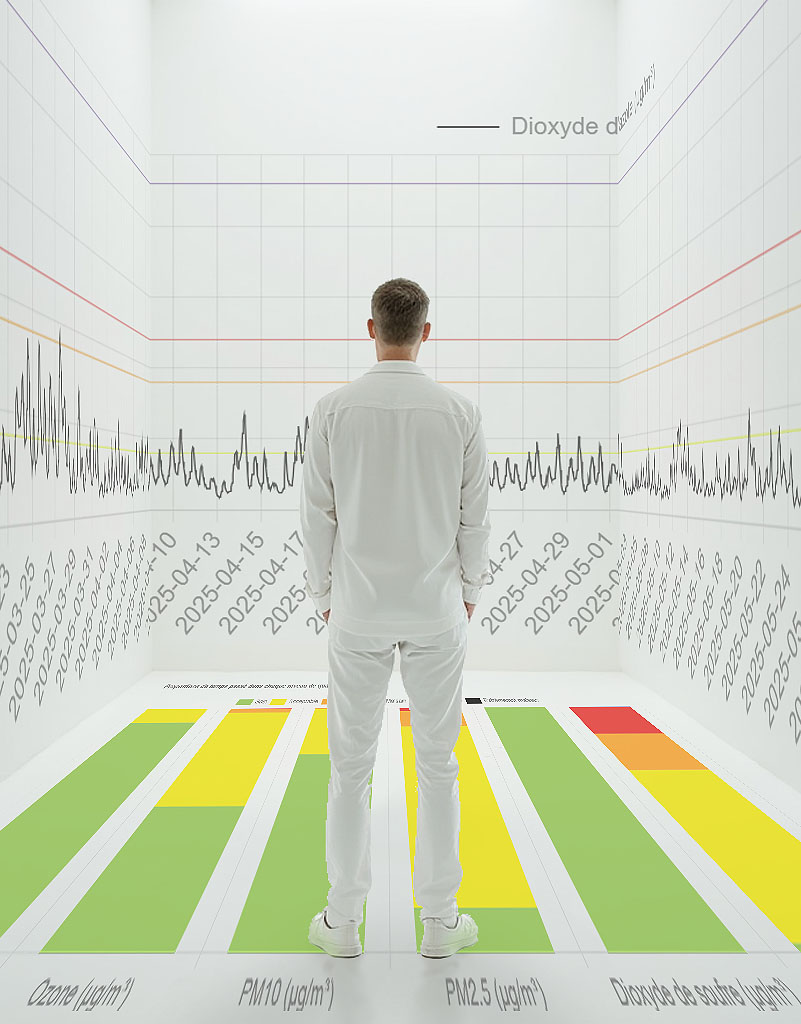
Free Air Quality Report
Receive a free analysis of the outdoor air quality near you: based on your country and city!
Does the air around your home contain pollutants? How has it changed in recent months? Is there a risk to your health?

3. Adapt Your Outdoor Habits
The goal is not to stay indoors, but to be strategic in limiting inhaled particles. When risk is high, a few simple adaptations can make a difference. Avoid mowing the lawn during pollination, favor outings early in the morning or in the evening, and limit prolonged outdoor activity on hot and windy days to reduce direct contact with allergens.

4. Wear Physical Protection
On high-risk days, consider adding an extra barrier with accessories. For example, wraparound or larger glasses reduce pollen contact with the eyes. A filter mask can reduce inhalation during major peaks or specific activities like gardening. Even a simple cap or hat helps prevent particles from settling in hair.
5. Transform Your Indoor Environment
This is where it really counts. Pollen does not stay outside. It enters through windows, clings to clothing, settles on surfaces… and remains suspended in indoor air for hours.
Even a visually clean home can contain a high concentration of invisible allergenic particles.
Good habits:
- Air out early in the morning or late in the evening
- Do not dry laundry outside
- Wash sheets and pillowcases regularly
- Change clothes when coming home
But this is not always enough.

6. Actively Improve Indoor Air Quality
Cleaning removes contaminated surfaces, and airing out helps renew the air. But if there is pollen outside, airing alone does not help: you need to remove the particles that remain suspended indoors.
These invisible particles (pollen, fine dust, and other allergens) are inhaled continuously and are harmful to allergic or sensitive individuals.
An air purifier with an efficient filtration system can:
- Capture suspended pollen grains
- Reduce overall particle concentration
- Purify the air in living spaces

A filter air purifier can be a bit noisy due to ventilation. If you need to continue reducing overall pollen particle concentration at night, consider a purifier that works via ionization: an air ionizer.
This helps maintain a more stable and, above all, quiet environment for sleeping: a time when prolonged exposure can worsen symptoms. When cleaning and airing are no longer enough, treating the air directly becomes a logical and effective strategy.

7. Take Care of Your Mucous Membranes
Additionally, a good habit to protect yourself from pollen is to regularly clean your mucous membranes (nasal passages, bronchi…).
Mucous membranes are the first areas affected by allergens. A nasal rinse with saline helps remove particles accumulated during the day, and taking a shower at night (especially washing hair) also helps limit nighttime contamination.
Explore Medical Solutions if Necessary
When symptoms persist despite environmental measures, medical treatment may be considered:
- Antihistamines: effective in limiting the inflammatory response.
- Nasal sprays / eye drops: target the most affected areas.
- Immunotherapy (desensitization): a long-term solution for severe allergies. Medical advice is essential to adapt the treatment.
Conclusion
Pollen allergies are not inevitable. You cannot control outdoor air, but you can manage your exposure, adapt your habits, and especially improve the quality of the air you breathe at home.
When regular cleaning is not enough to remove the particles responsible for symptoms, treating indoor air allows you to tackle the invisible source directly. Breathing better often starts… indoors.
Information on air quality and news from TEQOYA
How does an air ionizer work?
#Essential
Natural environments are rich in negative ions. This is precisely the principle on which the air ionizer is based on. However, do you know how this technology manages to capture the pollution particles contained in the indoor air to purify your home?
Are air purifiers effective against viruses, especially the coronavirus COVID-19
#Virus and microorganismes #L'essentiel
In December 2019, a respiratory virus of the Coronavirus family appeared in the Wuhan region of China and has now spread to all continents.
What is eco-responsibility?
#Essential
Purifying indoor air while protecting your health and the planet is possible! Say goodbye to filters and make way for negative ions: choose an eco-responsible air purifier that will easily reduce energy and resource consumption.

 Contact